





Table of contents

Get treated by pain treatment industry leaders
Bursitis Symptoms: Identifying Joint Bursa Inflammation

Medically verified
Last updated on 03/17/2026

By Dr. George Hanna
Pain Doctor at Pain Treatment Specialists
University of Pennsylvania
Double Certified in Anesthesiology and Pain Medicine.
Recognizing bursitis symptoms is the first step toward differentiating localized soft-tissue inflammation from deeper structural joint issues. Because a bursa sits between bone and tendon, the symptoms are often tied specifically to joint movement and mechanical pressure.
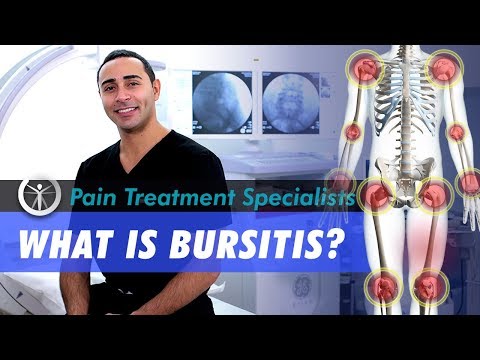
At Pain Treatment Specialists, we use an academic care model to evaluate your symptoms with diagnostic precision. By understanding the specific patterns of your pain and swelling, we can identify the exact bursa involved and provide a targeted, non-surgical relief plan.
Primary Signs of Bursa Inflammation
The hallmark of bursitis symptoms is localized pain that feels like a dull ache or stiffness within the joint. Unlike arthritis, which often involves a deep, constant grinding sensation, bursitis pain tends to be most acute during movement or when applying direct pressure to the area. For example, trochanteric bursitis in the hip is often most painful when lying on your side at night, while subacromial bursitis in the shoulder may flare up when reaching for an object on a high shelf. The pain is caused by the inflamed bursa sac thickening and losing its ability to provide a smooth, friction-free gliding surface.
In addition to pain, physical changes such as localized swelling and redness are common bursitis symptoms, particularly in superficial joints like the knee or elbow. The area around the inflamed bursa may feel “puffy” or tender to the touch. In some cases, the skin over the joint may feel warmer than the surrounding tissue. At Pain Treatment Specialists, we prioritize a thorough physical exam to observe these clinical signs. By mapping where the tenderness is most concentrated, our specialists can distinguish bursitis from other conditions like tendinitis, ensuring that your treatment plan is biologically accurate.
Secondary and Progressive Symptoms
As bursitis becomes chronic, secondary symptoms often emerge due to compensatory movement patterns. When a bursa is inflamed, you may unconsciously change your gait or posture to avoid pain, which can lead to muscle stiffness and aching in adjacent areas. For instance, chronic hip bursitis can lead to lower back strain as your body attempts to offload the pressure from the hip joint. You may also notice a significant reduction in your range of motion; the joint may feel “locked” or stiff, making it difficult to perform daily tasks like climbing stairs or getting dressed.
In rare cases, bursitis symptoms can include a fever or systemic chills, which may indicate septic bursitis—an infection within the bursa sac. This requires immediate clinical attention. Our academic approach at Pain Treatment Specialists involves screening for these “red flag” symptoms to ensure patient safety. For non-infected cases, identifying the progression of your symptoms allows us to intervene with precision procedures like ultrasound-guided injections. These treatments target the inflammation directly, stopping the symptoms from advancing and preventing long-term functional decline.

"I've been walking more and I don't feel that excruciating pain"
Joseph
Knee pain patient
"I'm feeling better and sleeping much more."
Charina
Back pain patient
"My knees have never felt better, I'm so happy"
Jasmin
Knee pain patient
"I immediately felt the relief and a lot of comfort."
Carlos
Knee pain patient
When to See a Specialist for Symptom Relief
You should seek a specialist’s evaluation if your bursitis symptoms persist for more than a week despite rest and home care. Persistent pain that interferes with sleep or your ability to perform your job is a sign that the inflammation has reached a threshold that requires professional interventional care. Early diagnosis is key; by identifying bursitis in its early stages, we can provide treatments that resolve the inflammation before it leads to permanent changes in the bursa wall or secondary joint complications.
A consultation at Pain Treatment Specialists provides the expert clarity needed to understand your joint health. Our board-certified physicians specialize in non-surgical recovery, offering the same high-level expertise found at top academic medical institutions. We take the time to explain your specific symptoms and how our advanced techniques can resolve your pain safely. If bursitis symptoms are stopping you from enjoying your life, a professional diagnostic workup is the most reliable first step toward achieving a life that is no longer defined by joint inflammation.
Most PPO insurances cover pain treatment!
and 100+ more
Questions about your insurance coverage?
We know health insurance is confusing, fortunately our expert team is always willing to help!
Just call us (877) 461-0819 to verify your coverage or answer any concern you may have.

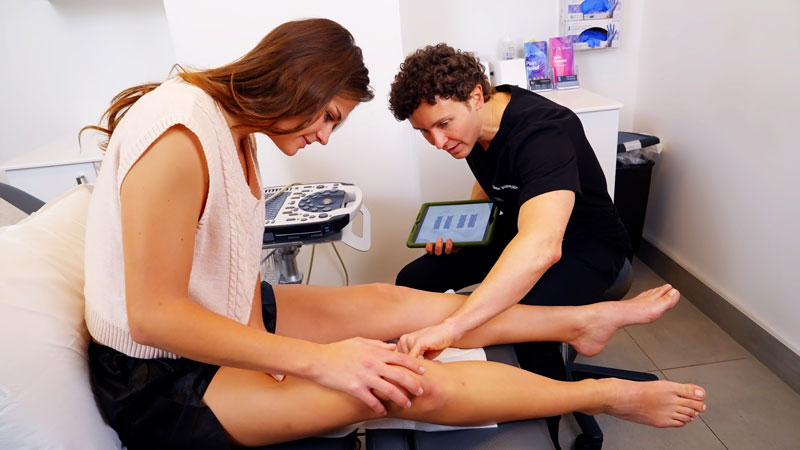
About the Medical Team at Pain Treatment Specialists

At Pain Treatment Specialists, our approach is rooted in an academic, evidence-based model of care that prioritizes patient safety and long-term outcomes. Our clinicians are trained at the nation’s leading medical institutions, bringing a high level of expertise to the diagnosis and treatment of complex pain conditions.
Clinical leadership at Pain Treatment Specialists is guided by a panel of board-certified specialists responsible for establishing and maintaining the clinic’s medical standards. Their approach reflects training developed at nationally recognized academic institutions such as Harvard, Yale, and Columbia.
All physicians follow a structured, highly standardized clinical model. This includes ongoing training in the latest non-surgical treatments, continuous review of emerging research, and strict adherence to proven safety and quality protocols to ensure consistent results.
If you’re experiencing symptoms and want clarity about the cause, a medical evaluation can help guide the next step. Schedule a Consultation

See how we change lives
Start Your Journey to
Pain-Free Life
At Pain Treatment Specialists, education is considered a core part of treatment. Patients are encouraged to understand their condition, their options, and the reasoning behind each recommendation to foster a collaborative recovery environment.
If you’re experiencing symptoms and want clarity about the cause, a medical evaluation can help guide the next step.
Take control, start feeling better
Take the first step to personalized care for your type of acute and chronic pain. One of our patient coordinators will call you to schedule your visit and verify insurance coverage.
