





Table of contents

Get treated by pain treatment industry leaders
Hip Pain: Understanding and Resolving Joint Discomfort

Medically verified
Last updated on 03/17/2026

By Dr. George Hanna
Pain Doctor at Pain Treatment Specialists
University of Pennsylvania
Double Certified in Anesthesiology and Pain Medicine.
Hip pain is a complex condition that can originate from the joint itself or the surrounding ligaments, tendons, and muscles. Understanding the specific anatomical source of your discomfort is essential for moving beyond temporary management toward a lasting clinical solution.

At Pain Treatment Specialists, we use an academic care model to evaluate the hip's intricate mechanics. By utilizing evidence-based protocols and minimally invasive techniques, we provide our patients with the clarity and specialized care needed to resolve pain and restore mobility.
What are the Common Causes of Hip Pain?
The hip is one of the body's largest weight-bearing joints, a "ball-and-socket" structure designed for fluid movement and stability. Hip pain occurs when the cartilage, bone, or soft tissues within this system become inflamed or damaged. Common causes include osteoarthritis, where the protective cartilage wears away over time, and hip bursitis, which involves inflammation of the fluid-filled sacs that cushion the joint. Additionally, pain may stem from labral tears or tendinitis, often manifesting as a deep ache in the groin or sharp pain on the outside of the hip during movement.
Differentiating between "intra-articular" pain (inside the joint) and "extra-articular" pain (outside the joint) is crucial for effective treatment. Often, pain felt in the hip area may actually be "referred pain" from the lower back or sacroiliac joints. At Pain Treatment Specialists, our board-certified specialists use advanced physical diagnostics and imaging to pinpoint the exact driver of your discomfort. By understanding whether the issue is structural, inflammatory, or mechanical, we can move away from general advice and toward a specific clinical intervention that targets the root cause.
When is Professional Evaluation Necessary?
While minor hip soreness may resolve with rest, persistent pain should be evaluated by a specialist to prevent long-term joint damage. You should seek a medical consultation if your hip pain interferes with daily activities like walking, climbing stairs, or sleeping. Warning signs include a clicking or snapping sensation in the joint, a reduced range of motion, or pain that travels down the thigh toward the knee. These symptoms suggest that the structural integrity of the hip is being compromised and requires a specialized diagnostic workup to determine the appropriate treatment path.
Early intervention is particularly important for active individuals and aging adults alike. If hip pain is left unaddressed, the body often compensates by changing its gait, which can lead to secondary pain in the lower back or knees. Our academic approach focuses on stopping this cycle of compensation. By mapping your symptoms to their anatomical source, we ensure that you receive an accurate diagnosis. This allows us to provide a medical strategy that avoids the need for invasive surgery while prioritizing the preservation of your natural joint function.

"I've been walking more and I don't feel that excruciating pain"
Joseph
Knee pain patient
"I'm feeling better and sleeping much more."
Charina
Back pain patient
"My knees have never felt better, I'm so happy"
Jasmin
Knee pain patient
"I immediately felt the relief and a lot of comfort."
Carlos
Knee pain patient
Non-Surgical Treatments for Hip Relief
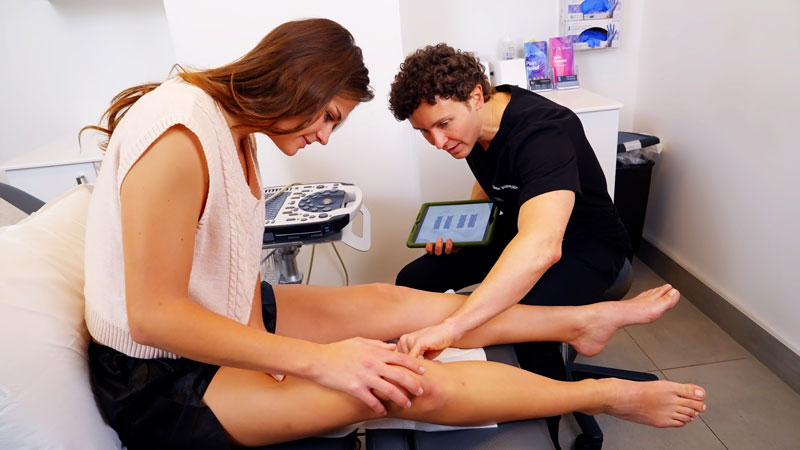
Modern interventional medicine offers several highly effective non-surgical alternatives for hip pain. Ultrasound-guided joint injections allow us to deliver anti-inflammatory medication directly into the hip capsule with extreme precision, providing rapid relief for arthritic conditions. For soft tissue issues like bursitis or tendinitis, targeted injections can "quiet" the inflamed tissues and facilitate faster healing. These procedures are designed to reduce swelling and improve lubrication within the joint, allowing patients to return to their normal activities without the downtime of traditional surgery.
Once the acute inflammation is controlled, we integrate functional rehabilitation to strengthen the muscles supporting the hip and pelvis. This "team-based" approach ensures that we address the postural and mechanical factors that contributed to the pain in the first place. By improving joint stability and gait mechanics, we help our patients achieve sustainable, long-term relief. If you are ready to find a definitive solution for your hip pain, a diagnostic evaluation at Pain Treatment Specialists is the most reliable first step toward reclaiming your active lifestyle.
Most PPO insurances cover pain treatment!
and 100+ more
Questions about your insurance coverage?
We know health insurance is confusing, fortunately our expert team is always willing to help!
Just call us (877) 461-0819 to verify your coverage or answer any concern you may have.

About the Medical Team at Pain Treatment Specialists

At Pain Treatment Specialists, our approach is rooted in an academic, evidence-based model of care that prioritizes patient safety and long-term outcomes. Our clinicians are trained at the nation’s leading medical institutions, bringing a high level of expertise to the diagnosis and treatment of complex pain conditions.
Clinical leadership at Pain Treatment Specialists is guided by a panel of board-certified specialists responsible for establishing and maintaining the clinic’s medical standards. Their approach reflects training developed at nationally recognized academic institutions such as Harvard, Yale, and Columbia.
All physicians follow a structured, highly standardized clinical model. This includes ongoing training in the latest non-surgical treatments, continuous review of emerging research, and strict adherence to proven safety and quality protocols to ensure consistent results.
If you’re experiencing symptoms and want clarity about the cause, a medical evaluation can help guide the next step. Schedule a Consultation
See how we change lives
Start Your Journey to
Pain-Free Life
At Pain Treatment Specialists, education is considered a core part of treatment. Patients are encouraged to understand their condition, their options, and the reasoning behind each recommendation to foster a collaborative recovery environment.
If you’re experiencing symptoms and want clarity about the cause, a medical evaluation can help guide the next step.
Take control, start feeling better
Take the first step to personalized care for your type of acute and chronic pain. One of our patient coordinators will call you to schedule your visit and verify insurance coverage.
