





Table of contents

Get treated by pain treatment industry leaders
Bursitis Causes: Understanding the Triggers of Inflammation

Medically verified
Last updated on 03/17/2026

By Dr. George Hanna
Pain Doctor at Pain Treatment Specialists
University of Pennsylvania
Double Certified in Anesthesiology and Pain Medicine.
Identifying bursitis causes is essential for moving beyond temporary relief and achieving a long-term clinical solution. Because a bursa’s primary role is to reduce friction, any disruption in joint mechanics or sudden trauma can trigger a painful inflammatory response within the sac.

At Pain Treatment Specialists, we use an academic care model to investigate the specific triggers of your joint inflammation. By understanding the mechanical drivers of your pain, we can develop a precise treatment plan that addresses both the symptoms and the root cause of your bursitis.
Mechanical Stress and Repetitive Motion
The most frequent bursitis causes are related to repetitive mechanical stress. When a joint is subjected to the same motion over and over—such as swinging a tennis racket, lifting heavy objects, or even prolonged kneeling—the tendons and muscles repeatedly glide over the protective bursa. If the joint mechanics are slightly off or the volume of activity is too high, this constant friction irritates the bursa wall. In response, the bursa thickens and produces excess fluid, a process known as effusion, which leads to the characteristic swelling and pain of bursitis.
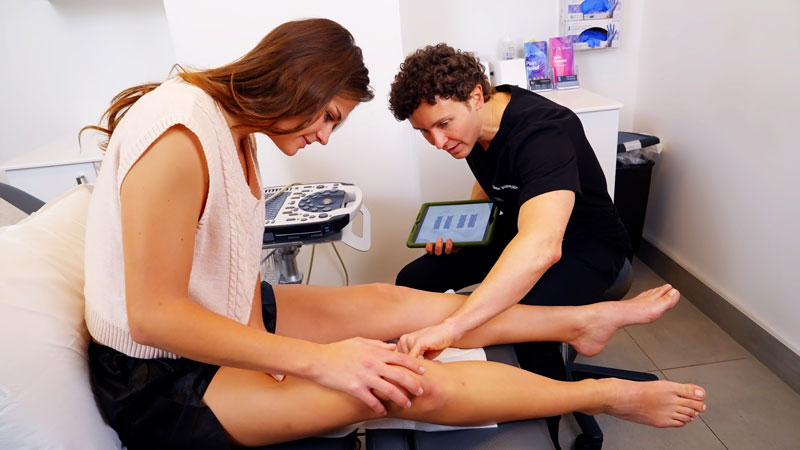
Mechanical imbalances are often the underlying reason for chronic flare-ups. For example, weakness in the gluteal muscles can cause the iliotibial (IT) band to rub excessively against the hip bursa, leading to trochanteric bursitis. At Pain Treatment Specialists, our board-certified physicians specialize in identifying these functional triggers. By using high-resolution ultrasound, we can observe the bursa during movement to see exactly how mechanical friction is impacting the tissue. This allows us to provide interventional care that neutralizes the inflammation while addressing the faulty mechanics.
Trauma and Underlying Medical Conditions
While repetitive stress is the primary driver, acute trauma is another significant factor among bursitis causes. A direct blow to the joint—such as a fall onto the hip or hitting your elbow against a hard surface—can cause the bursa to fill with blood or inflammatory fluid instantly. Additionally, certain systemic medical conditions can predispose individuals to bursa inflammation. Conditions like gout, where uric acid crystals deposit within the joint, or rheumatoid arthritis, which causes systemic inflammation of the synovial tissues, can frequently lead to recurring episodes of bursitis in multiple joints.
Understanding the biological context of your bursitis is a core part of our academic approach. If a bursa is inflamed due to a systemic condition or trauma, the treatment strategy must be specifically tailored to address that biological trigger. Our specialists conduct a thorough medical screening to differentiate between mechanical irritation and inflammatory disease. For non-systemic cases, we utilize precision interventional techniques like guided injections to "reset" the bursa's environment. This provides a definitive clinical path to recovery that prevents the inflammation from leading to permanent joint stiffness.

"I've been walking more and I don't feel that excruciating pain"
Joseph
Knee pain patient
"I'm feeling better and sleeping much more."
Charina
Back pain patient
"My knees have never felt better, I'm so happy"
Jasmin
Knee pain patient
"I immediately felt the relief and a lot of comfort."
Carlos
Knee pain patient
Age and Lifestyle Risk Factors
As we age, the tissues that make up our joints—including tendons and bursae—become less resilient and more susceptible to injury. This makes aging a natural risk factor for bursitis. Furthermore, lifestyle factors such as an occupation that requires frequent kneeling (like flooring or plumbing) or participating in high-impact sports can increase the likelihood of developing chronic bursa issues. Regardless of the specific cause, the physiological result is a loss of the bursa’s ability to act as a low-friction cushion, which ultimately limits your ability to move comfortably and stay active.
A consultation at Pain Treatment Specialists provides the diagnostic clarity needed to understand your outlook. Our board-certified physicians specialize in non-surgical recovery, offering the same high-level expertise found at top academic medical institutions. We take the time to explain the medical reality of your diagnosis and how interventional techniques can resolve your pain safely. If bursitis is stopping you from enjoying your life, a professional diagnostic workup is the most reliable first step toward achieving a life that is no longer defined by the limitations of joint inflammation.
Most PPO insurances cover pain treatment!
and 100+ more
Questions about your insurance coverage?
We know health insurance is confusing, fortunately our expert team is always willing to help!
Just call us (877) 461-0819 to verify your coverage or answer any concern you may have.

About the Medical Team at Pain Treatment Specialists

At Pain Treatment Specialists, our approach is rooted in an academic, evidence-based model of care that prioritizes patient safety and long-term outcomes. Our clinicians are trained at the nation’s leading medical institutions, bringing a high level of expertise to the diagnosis and treatment of complex pain conditions.
Clinical leadership at Pain Treatment Specialists is guided by a panel of board-certified specialists responsible for establishing and maintaining the clinic’s medical standards. Their approach reflects training developed at nationally recognized academic institutions such as Harvard, Yale, and Columbia.
All physicians follow a structured, highly standardized clinical model. This includes ongoing training in the latest non-surgical treatments, continuous review of emerging research, and strict adherence to proven safety and quality protocols to ensure consistent results.
If you’re experiencing symptoms and want clarity about the cause, a medical evaluation can help guide the next step. Schedule a Consultation
See how we change lives
Start Your Journey to
Pain-Free Life
At Pain Treatment Specialists, education is considered a core part of treatment. Patients are encouraged to understand their condition, their options, and the reasoning behind each recommendation to foster a collaborative recovery environment.
If you’re experiencing symptoms and want clarity about the cause, a medical evaluation can help guide the next step.
Take control, start feeling better
Take the first step to personalized care for your type of acute and chronic pain. One of our patient coordinators will call you to schedule your visit and verify insurance coverage.
